Isn't kratom actually dangerous though?
+
The CDC's own data shows kratom-involved deaths average ~10 per year in a population of 10+ million users (0.0001% mortality rate). 100%+ of these cases involved fentanyl, heroin, or prescription drugs—not kratom alone. Compare that to: FDA-approved opioids (50,000 deaths/year), alcohol (95,000 deaths/year), tobacco (480,000 deaths/year), NSAIDs like Advil (16,500 deaths/year), or even Tylenol (500+ deaths/year). Johns Hopkins research on 8,000+ kratom users found minimal adverse effects and significant harm reduction benefits. The safety record isn't just clear—it's exceptional.
Why would the FDA lie about this?
+
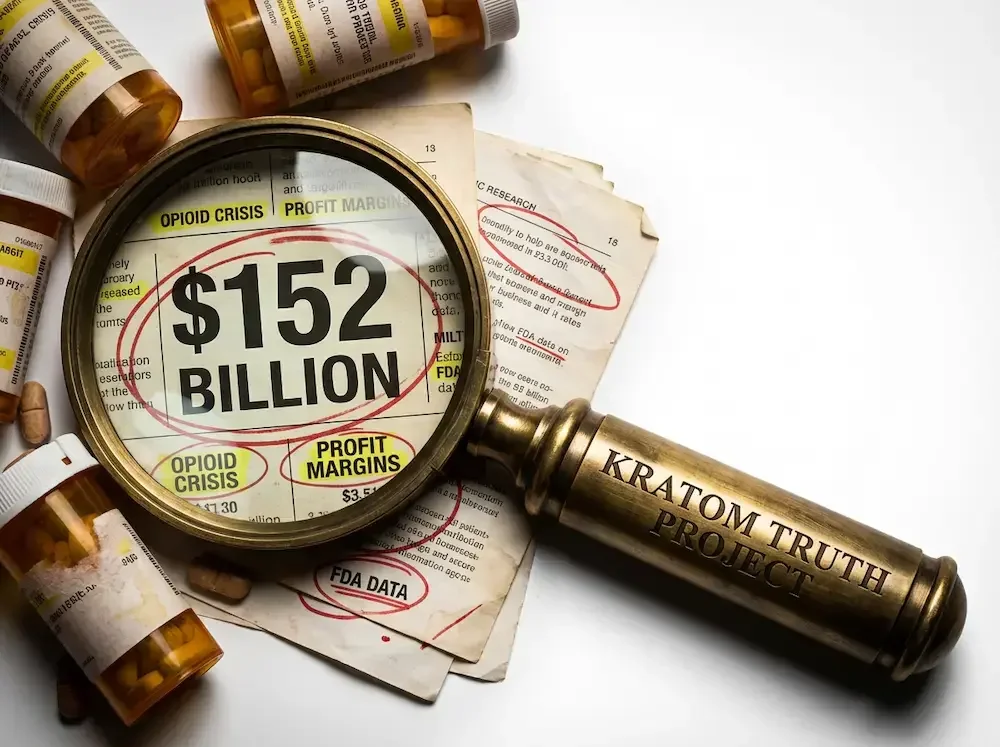
Follow the money. The addiction treatment industry alone is worth $152 billion annually - not to mention the $106 billion in anti-depressants, anxiety, pain, ADHD, and sleep medications. Kratom costs $30-60/month and can't be patented. Suboxone costs $300-600/month and IS patented. If just 10% of Suboxone patients switch to kratom, the industry loses $1.6 billion annually. FDA Commissioner Scott Gottlieb (who aggressively pushed kratom prohibition) returned to Pfizer's board after leaving office. 45% of FDA reviewers work for pharma companies within 5 years. Indivior (Suboxone manufacturer) spent $5M+ lobbying against kratom while paying $600M in fraud settlements. This isn't incompetence—it's institutional corruption with documented financial conflicts.
Can't you get addicted to kratom?
+
Johns Hopkins research shows 3-6% of kratom users develop dependency, compared to 30% for cannabis (legal in 24+ states), 50%+ for prescription opioids, 23% for alcohol, and 68% for tobacco. Kratom withdrawal is uncommon—most recreational users experience no withdrawal at all. When it does occur, it's typically only in daily users or former opioid patients who use kratom as a harm reduction tool. Even then, withdrawal lasts 2-7 days with mild symptoms (irritability, insomnia, runny nose) versus 6-8 weeks for Suboxone withdrawal or months for methadone. The contrast is stark: kratom helps people quit opioids with minimal discomfort, while pharmaceutical "treatments" like Suboxone create longer, more severe dependency than the original addiction. Is kratom risk-free? No substance is. But the question isn't whether kratom has ANY risk—it's whether it's safer than the alternatives. The data is overwhelming: yes. That's exactly why the pharmaceutical industry needs it banned—it's too safe and too cheap to be profitable under their control.
What about those scary news stories and "kratom deaths"?
+
We traced the PR campaign. Influencers were paid $5,000-50,000 per post to share scripted "kratom horror stories" through intermediary PR firms. 20+ nearly-identical posts appeared within 72 hours across different platforms. Mainstream media then cited these paid testimonials as "grassroots concerns" without disclosing the financial relationships. Example: The widely-circulated "kratom death" claims cited 44 deaths—but the FDA's own data showed all involved polydrug use (fentanyl, heroin, prescription meds). Not a single death from kratom alone. That's not journalism—it's pharmaceutical advertising disguised as news coverage. The exact same playbook was used against cannabis in the 1930s.
If this is true, why isn't mainstream media covering it?
+
Pharmaceutical companies spent $9.6 billion on advertising in 2023—70% going to TV, print, and digital media. They're the largest advertising category for most news networks. CNN, MSNBC, Fox News all run 10-15 pharma ads per hour during prime time. News organizations won't investigate their biggest revenue source. Add to that: pharma companies donate to medical schools ($200M+ to Mayo Clinic alone), fund research institutions ($300M+ to Johns Hopkins), and employ former FDA commissioners as board members. The entire information ecosystem is financially captured. Independent journalism is the only way this corruption gets exposed—traditional media has a $9.6 billion incentive to look the other way.
What's the endgame if kratom gets banned?
+
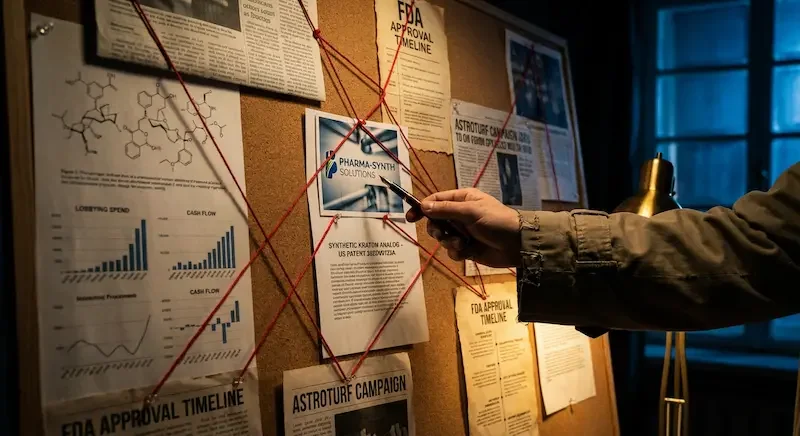
The cannabis playbook reveals the strategy: ban the natural plant, develop synthetic versions, patent them, charge 10-20x more. Marinol (synthetic THC) costs $600-1,800/month vs. natural cannabis at $100-300/month. Epidiolex (pharmaceutical CBD) costs $32,500/year vs. natural CBD at $50-150/month. The same companies lobbying to ban kratom have already filed patents for synthetic mitragynine and 7-hydroxymitragynine. Clinical trials are underway. If kratom is banned and 5 million users are forced into the pharmaceutical system at $600/month instead of $50/month, that's a $36 billion annual market transfer from consumers to patent holders. Prohibition isn't about safety—it's about eliminating affordable competition before launching expensive monopoly alternatives.
What can I do about this?
+
Share this investigation. Every person who understands the financial corruption behind prohibition becomes immune to the propaganda. Contact your representatives. Demand they disclose pharmaceutical industry contributions and explain their kratom position. Support the American Kratom Association. They're fighting state-by-state legislative battles with actual advocacy, not astroturfing. Support the Kratom Consumer Protection Act (KCPA). Regulation, not prohibition—testing, labeling, age restrictions without banning access. Report suspected astroturfing to the FTC. Undisclosed paid endorsements violate federal law. Most importantly: stop trusting institutions that profit from keeping you sick. Your skepticism is your power. Question authority. Follow the money. Demand transparency. That's how we win.